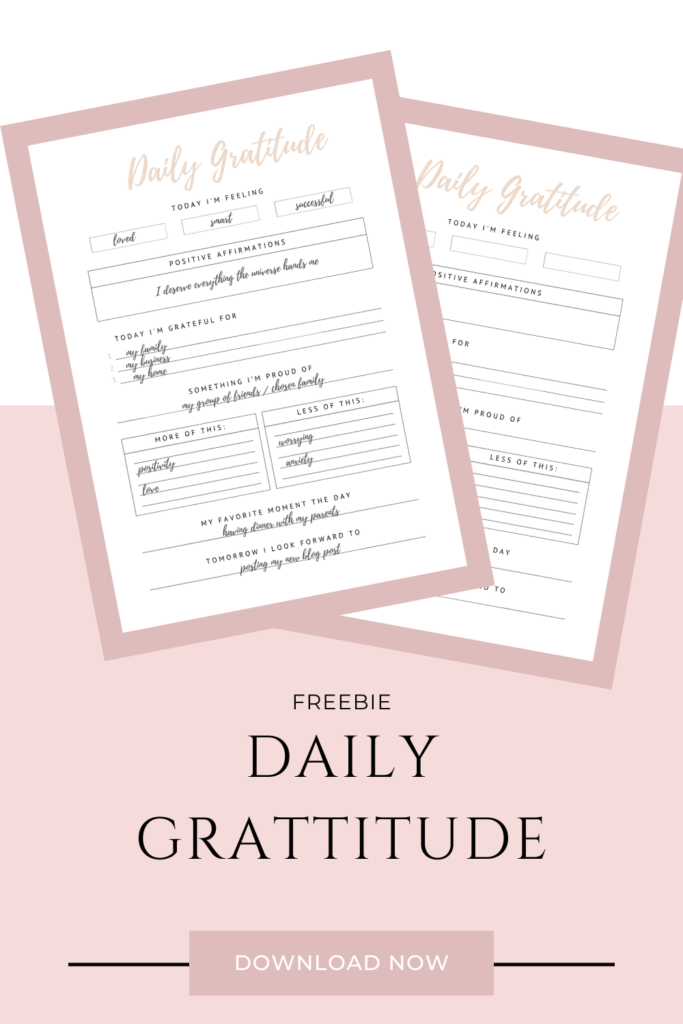
In today’s fast-paced world, where daily stresses and responsibilities seem unending, we’re all searching for ways to cultivate happiness, reduce anxiety, and feel more grounded. One practice that’s proven itself to be simple yet profoundly impactful is maintaining a gratitude journal. But what exactly is a gratitude journal, and how can it bring about real change in your life? Let’s explore the benefits of gratitude journaling, how to start one, and why this mindful practice could be the boost you didn’t know you needed. If you want a pre-made gratitude sheet, follow the link below and get your daily gratitude journal entry sheet for free.
Why Gratitude Matters
Gratitude is more than just saying “thank you” occasionally; it’s a way of seeing the world that reshapes our mental patterns and makes us more resilient, compassionate, and happy. Studies in positive psychology have consistently shown that people who regularly practice gratitude are less likely to suffer from depression, anxiety, and chronic stress. This is largely because gratitude encourages us to focus on the good in our lives rather than dwelling on what we lack.
The Science Behind a Gratitude Journal
Keeping a gratitude journal taps into the psychology of gratitude on a daily level. When you write down the things you’re thankful for, you reinforce neural pathways in your brain that are associated with positive emotions. Essentially, the more you focus on gratitude, the easier it becomes for your mind to seek out the good in life. Over time, this rewiring can lead to long-term benefits, including:
- Reduced stress: By focusing on what’s going well, a gratitude journal helps you reframe stressful situations.
- Better sleep: Many who keep a gratitude journal before bed report improved sleep quality, as they go to bed with a sense of peace.
- Enhanced relationships: When you appreciate the people around you, relationships tend to improve as well.
- Improved physical health: Believe it or not, gratitude can even boost your immune system and overall health, as it decreases cortisol levels and promotes relaxation.
Starting Your Gratitude Journal: A Beginner’s Guide
If you’re new to the idea of a gratitude journal, the first step is setting aside dedicated time each day to write. It doesn’t have to be a time-consuming activity; even five minutes can be enough to make a difference. Here’s a simple guide to get you started:
- Choose Your Journal: While any notebook can serve as a gratitude journal, choosing one that feels personal and enjoyable to write in can add to the experience. There are also many gratitude-specific journals with prompts to help you along the way.
- Set a Routine: Consistency is key to seeing results. Set a specific time, such as in the morning or before bed, to journal about what you’re thankful for.
- Start with 3 Things Daily: Begin each entry by listing at least three things you’re grateful for. These can be as small as your morning coffee or as big as a career breakthrough.
- Be Specific: The more detail you add, the more real and meaningful your gratitude entries will feel. Instead of “I’m grateful for my friends,” try “I’m grateful for the lunch I had with Sarah today and how she made me laugh.”
- Reflect on How Gratitude Makes You Feel: Journaling about the emotions that arise with each entry deepens the experience, making it more memorable and impactful.
If you are looking for a structured way to fill in a gratitude sheet, download my gratitude journal entry sheet here.
What to Write in Your Gratitude Journal
Many people worry they’ll “run out” of things to be grateful for, but gratitude is boundless once you start paying attention. Here are a few categories to inspire your daily entries:
- People in Your Life: Friends, family, colleagues, or even strangers who made your day better.
- Experiences: Any recent event, no matter how small, that brought you joy or peace.
- Things You Often Take for Granted: Running water, your health, access to technology, or a safe place to live.
- Personal Growth: Moments of self-discovery, personal achievements, or even challenges you overcame.
- Simple Pleasures: A favorite book, the beauty of a sunset, or your cozy bed.
Maintaining a Gratitude Journal: Tips to Keep the Habit Going
Starting a gratitude journal is relatively easy; the challenge lies in maintaining it consistently. Here are some effective ways to make gratitude journaling a sustainable habit:
- Set Reminders: Use phone alarms, post-it notes, or apps to remind yourself to write in your gratitude journal every day.
- Find a Buddy: Share the experience with a friend or partner. Accountability can help you stick with the practice and make it more fun.
- Reflect Monthly: Every month, read through your entries to see how far you’ve come. This review can reinforce the positive effects of your practice.
- Make It Fun: Add drawings, doodles, or even photos to your gratitude journal entries. Personalizing the journal can make the practice feel less like a chore and more like self-expression.
- Forgive Missed Days: There’s no need to stress if you miss a day or two. Gratitude journaling is a personal journey, and flexibility is key to keeping it enjoyable and manageable.
The Unexpected Benefits of Keeping a Gratitude Journal
Beyond feeling good in the moment, a gratitude journal can lead to a cascade of positive effects in your life. Some of these benefits might even surprise you:
- Increased Resilience: People who regularly practice gratitude are often better equipped to handle setbacks and disappointments.
- Stronger Social Connections: Focusing on gratitude helps us appreciate the people around us, which in turn strengthens our relationships.
- Boosted Creativity: Gratitude allows your mind to relax and approach challenges from a new perspective, which can be a great boost to creativity and problem-solving.
- Heightened Empathy: With a gratitude journal, you start to see the good in others and become more compassionate.
Digital vs. Paper: Which is Better for Your Gratitude Journal?
While a traditional paper journal has its charm, digital gratitude journaling can be just as effective. Both formats have their pros and cons, so choosing the best fit for you depends on your personal preferences.
- Paper Journals: They offer a tangible, creative experience. Many people feel more connected to their thoughts when writing by hand. Plus, there’s something timeless and soothing about using a pen and paper.
- Digital Journals: Apps and online tools are more convenient and accessible. Some apps offer prompts, notifications, and even community support to help you stay consistent with your gratitude journaling.
Consider experimenting with both to see which method resonates most with you. The free gratitude sheet I made can be used digitally but you can also print it and add it to a binder.
FAQs About Gratitude Journals
Q: How often should I write in my gratitude journal?
A: Writing every day yields the best results, but even two to three times a week can make a difference.
Q: Can I include negative experiences in my gratitude journal?
A: Yes! Gratitude journaling isn’t about ignoring hardships; it’s about finding the good within them. Writing about what you’ve learned or how you’ve grown from tough experiences can be incredibly empowering.
Q: Do I need a fancy journal or app to get started?
A: Absolutely not. Any notebook or even the notes app on your phone can serve as your gratitude journal.
Q: Is there a specific time of day to write in my gratitude journal?
A: Many people prefer mornings to set a positive tone for the day or evenings to reflect before sleep. Try both and see what feels best for you.
Gratitude Journal Prompts to Inspire You
If you ever feel stuck, use prompts to spark new ideas and deepen your gratitude practice. Here are a few to get you started:
- What’s one kind thing someone did for you recently?
- Describe a recent accomplishment you’re proud of.
- What about your health are you grateful for today?
- Who has positively impacted your life, and why?
- What’s something beautiful you saw or heard today?
Bringing It All Together
A gratitude journal is more than just a place to jot down happy thoughts—it’s a tool that can transform your mindset and enrich your life. By consistently recognizing and appreciating the good around us, we open ourselves up to more joy, resilience, and connection. So, grab a notebook or download an app, and start your gratitude journal today. It could be the simplest, most rewarding practice you’ll ever add to your routine.
Don’t forget to download your free daily gratitude journal entry sheet here.